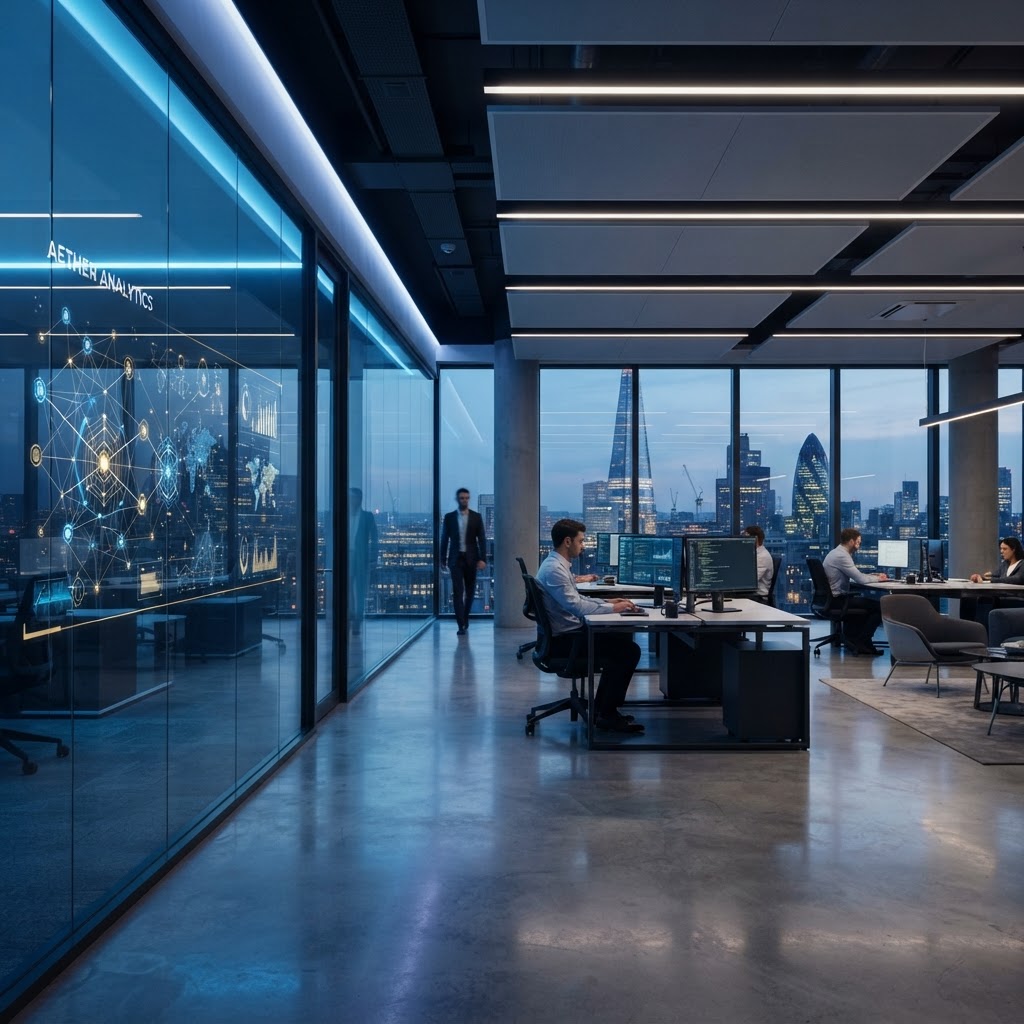
The Autonomous Workplace: Integrating AI-Driven IoT for Net-Zero Operations In the current landscape of July 2026, the mandate for UK organisations is clear: workplace technology must bridge the gap between human comfort and environmental sustainability. As businesses strive to meet Net-Zero targets while managing the complexities of hybrid work models, the shift from 'smart' to 'autonomous' infrastructure is no longer a luxury—it is an operational necessity. ### The Intelligent Building Ecosystem The modern office is now a living ecosystem. Through the integration of iwSENSE proptech and advanced sensor arrays, we are seeing the rise of buildings that 'think' for themselves. By utilising granular data from HVAC and lighting systems, autonomous building management systems (BMS) are now capable of predictive maintenance and automated load balancing. This reduces energy waste by an average of 22% compared to traditional smart building standards. ### Enhancing Security with Predictive Intelligence At the core of the secure workplace lies the integration of AI with physical security. Using the iwGUARD framework, we are deploying computer vision analytics that distinguish between routine staff movement and anomalous activity in real-time. By connecting cloud-based access control with AI-driven CCTV, we have moved beyond reactive security to a proactive model: 1. Automated threat detection using federated learning models that protect data privacy. 2. Seamless integration with visitor management systems for frictionless entry. 3. Real-time alerting that integrates directly with iwCONNECT telephony to notify onsite SIA-licensed personnel immediately when security thresholds are breached. ### Connectivity as the Foundation Success in the autonomous workplace depends on a robust digital backbone. With the widespread adoption of Wi-Fi 7 (802.11be) and private 5G networks, the latency required for machine-to-machine communication is effectively nullified. Our iwTECH specialists are observing that high-density office environments now require a Virtual CTO approach to ensure that IoT devices—from smart lighting to acoustic sensors—do not congest critical enterprise IT traffic. ### The Convergence of Media and Wellbeing Digital signage and AV solutions are no longer just for brand communication. Through iwMEDIA, we are seeing smart signage that adjusts brightness based on ambient natural light, further reducing energy consumption while maintaining optimal visibility. Furthermore, acoustic solutions integrated into video-first meeting rooms are now using AI-driven noise cancellation to ensure that hybrid collaborations remain inclusive and high-fidelity, regardless of the user's location. ### Steps Toward an Autonomous Future For organisations looking to audit and upgrade their current infrastructure, we recommend a three-stage transition: 1. Data Baselining: Deploy sensor arrays to understand current building utilisation, energy peaks, and security bottlenecks. 2. System Interoperability: Move away from siloed legacy systems by adopting an API-first approach, allowing your print, security, and HVAC systems to share telemetry data. 3. AI-Driven Orchestration: Implement an overarching AI layer that automates routine facility decisions, allowing your personnel to focus on high-value strategy rather than manual building management. The autonomous workplace is not a distant vision—it is the standard for the competitive UK business in 2026. By aligning intelligent technology with long-term sustainability and security goals, firms can create spaces that are as resilient as they are efficient.