
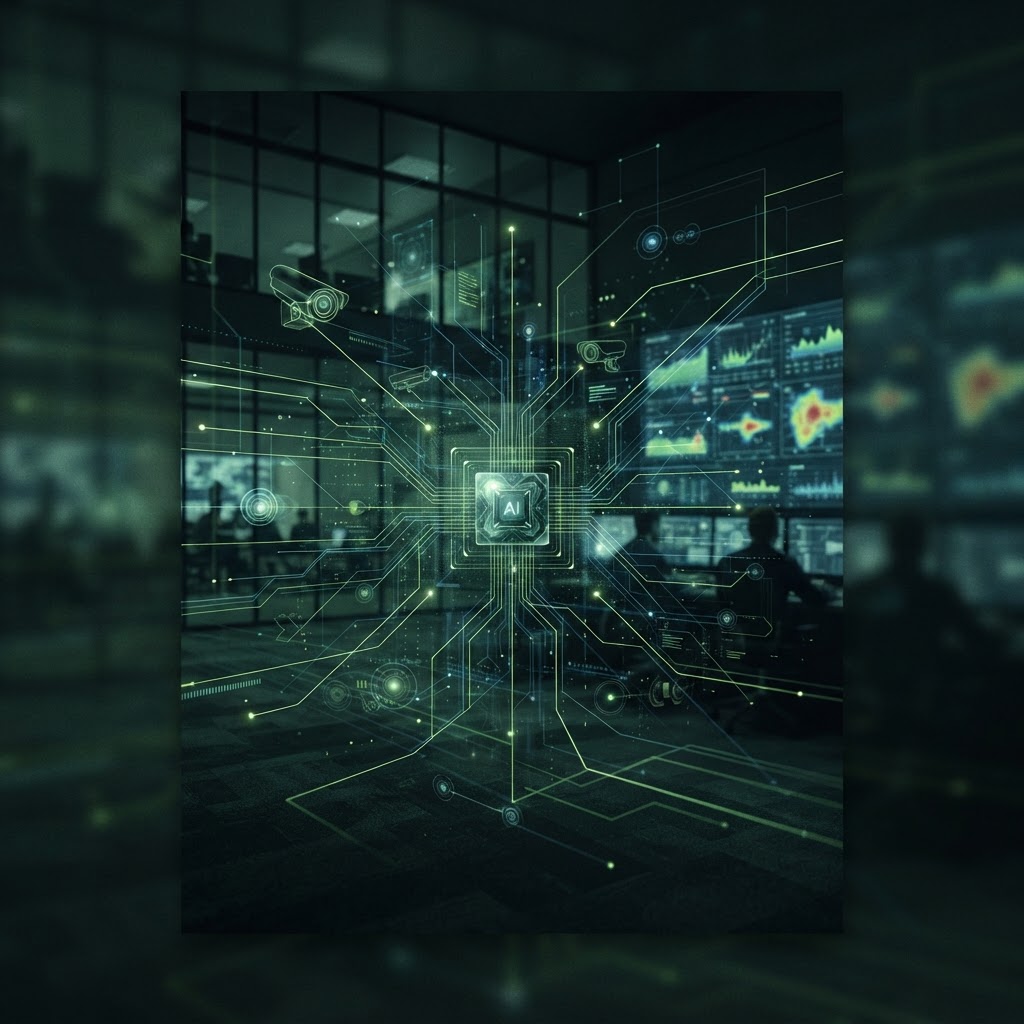
Introduction: The Evolution of Surveillance
The traditional CCTV system, often relegated to the status of a forensic tool, is undergoing a profound architectural transformation. Historically, video surveillance functioned as a passive archive, gathering data that would only be reviewed after a security breach or criminal incident had occurred. In today’s complex threat environment, this reactive posture is no longer sufficient to protect high-profile individuals, sensitive venues, or public spaces. Modern security demands a shift towards predictive intelligence, where cameras act as cognitive sensors capable of identifying, classifying, and alerting on anomalies in real-time.
The global shift in threat landscapes, underscored by the UK's CONTEST counter-terrorism strategy, mandates that organisations take a more rigorous approach to protective security. Current guidance from the NPSA (National Protective Security Authority) emphasizes the need for 'deterrence, detection, and delay' mechanisms. By leveraging artificial intelligence (AI) and edge computing, contemporary CCTV platforms can now filter the noise of daily operations to focus human attention only on verified risks. This transition allows security personnel to pivot from monitoring screens to executing tactical responses, significantly reducing the mean time to detect (MTTD) during critical incidents.
The Strategic Imperative
Transitioning to intelligent video systems is not merely a technological upgrade; it is an operational imperative driven by the need for enhanced resilience. As organisations face mounting pressures to comply with upcoming legislation such as the 'Martyn’s Law' (Terrorism (Protection of Premises) Bill), the ability to demonstrate a proactive security posture is vital. Integrating intelligent surveillance with risk management platforms allows for the seamless synthesis of data, transforming isolated video feeds into actionable intelligence. This paper examines how these advancements are reshaping the physical security landscape and providing a robust framework for incident prevention.
The Intelligence Layer: AI and Behavioural Analytics
AI-enabled CCTV systems operate by processing metadata at the edge, allowing for sophisticated pattern recognition that would be impossible for human operators to maintain over long periods. Unlike traditional motion detection—which often generates excessive false positives due to environmental factors—computer vision algorithms can distinguish between legitimate activity and genuine security threats. By training systems to recognise specific human behaviours, such as loitering in restricted zones or pacing, facilities can initiate automated alert sequences long before a perimeter is breached.
Identification and Access Control
Facial Recognition Technology (FRT) has become a cornerstone of modern identity management, providing the capability to identify 'Persons of Interest' (POI) the moment they enter a designated area. When integrated with a secure Sentinel risk database, this allows for immediate notification of security teams regarding known threats, banned individuals, or high-value visitors. This capability significantly elevates the efficacy of physical security hardware, ensuring that manned guarding resources are deployed only where intelligence indicates they are needed most.
Operational Safety and Compliance
Beyond external threats, intelligent video analytics provide substantial utility in internal risk management and ISO 22301 business continuity efforts. AI models can detect the presence or absence of Personal Protective Equipment (PPE) in high-risk zones, such as construction sites or industrial facilities. Automated alerts can inform site managers of non-compliance instantly, preventing accidents and ensuring adherence to stringent safety regulations. By automating the monitoring of health and safety standards, organisations can reduce their legal liability while maintaining a culture of safety.
Situational Awareness and Asset Protection
Managing large-scale venues or public spaces requires an understanding of crowd dynamics and object integrity. Intelligent systems can now track the density and flow of people, alerting operators to potential overcrowding risks that could lead to crush injuries or facilitate illegal activity. By integrating these metrics into a central command system, facility managers can dynamically adjust ingress and egress points, maintaining crowd control in compliance with NPSA protective security principles.
Detection of Abandoned Items
One of the most critical applications of intelligent video is the detection of unattended items. Algorithms monitor static areas for objects that have been placed and left, providing immediate alerts to security teams. In a high-profile setting, this allows for rapid assessment of whether an item represents a legitimate hazard or a security risk, significantly enhancing the speed and quality of the response compared to manual observation.
Mitigating Loitering Risks
AI analytics allow for the defining of 'geofenced' virtual zones where loitering is prohibited. Unlike traditional alarm systems that are easily bypassed, these intelligent filters operate in the background, identifying individuals who remain in a vicinity beyond a defined time threshold. This is particularly effective for protecting sensitive infrastructure or high-value assets where prolonged observation by unauthorized parties is often a precursor to planned illegal activity.
Integration: The Sentinel Ecosystem
The true power of modern security technology is unlocked only when hardware, intelligence, and personnel are unified into a single ecosystem. At iwGROUP, our Sentinel platform serves as the central brain for this integration. By connecting CCTV feeds directly into a risk-informed interface, we provide a holistic view of the threat environment. This connection ensures that when an intelligent camera identifies a potential anomaly, the data is immediately validated against current threat levels and resource availability.
Seamless Data Flow
When security cameras operate in silos, the risk of data fatigue or informational lag increases. Our Sentinel approach bridges this gap by feeding AI alerts directly into a real-time operational dashboard. This allows security managers to review the context of an alert, verify the footage, and deploy personnel based on real-time data, rather than guesswork. This ecosystem supports the NIST Cybersecurity Framework principles by ensuring that data handling, access control, and response protocols are consistent across the board.
Manned Guarding Synergy
Even the most sophisticated AI cannot replace the nuance of professional human judgement. Instead, these technologies act as a force multiplier for security teams. When the system highlights a critical event, the assigned guards receive the exact location and nature of the incident on their mobile devices. This interaction between iwGUARD physical security personnel and iwTECH data streams ensures that the response is always proportional, informed, and rapid.
Common Pitfalls and Ethical Considerations
Despite the clear benefits of AI-driven surveillance, organisations must navigate significant challenges, including privacy regulation and data accuracy. A common misconception is that AI eliminates the need for human oversight; on the contrary, it necessitates a higher standard of training for operators. Relying on automated alerts without a robust 'Human-in-the-Loop' verification protocol can lead to the 'Cry Wolf' syndrome, where genuine threats are ignored due to alarm fatigue.
Ensuring Compliance and Privacy
Regulatory compliance, particularly with the UK GDPR and the Data Protection Act 2018, is non-negotiable. Organisations must conduct thorough Data Protection Impact Assessments (DPIAs) before implementing advanced features like facial recognition. Failure to communicate the presence of intelligent surveillance to stakeholders can lead to public backlash and legal repercussions. Security leaders must be transparent about the purpose of these technologies, emphasising safety and incident prevention over invasive monitoring.
Avoiding Implementation Errors
- Over-reliance on automation without calibrating the sensitivity of algorithms.
- Failing to integrate the security system with the organisational emergency response plan.
- Neglecting the physical maintenance of camera lenses and infrastructure, leading to poor data quality.
- Lack of continuous staff training on how to interpret and act on AI-generated alerts.
Implementation Roadmap: A Step-by-Step Approach
Implementing an intelligent CCTV ecosystem requires a phased approach that balances technological ambition with operational maturity. Organisations should follow this structured methodology to ensure a successful deployment:
- Needs Assessment: Define the specific risks (e.g., perimeter intrusion, theft, health & safety) and map them to current
NPSAthreat levels. - Infrastructure Audit: Review existing connectivity (
iwCONNECT) and hardware to ensure they meet the bandwidth and processing requirements of AI edge analytics. - Policy Development: Draft clear protocols on how AI data will be handled, who has access, and what the automated response triggers will be.
- Pilot Testing: Deploy intelligent cameras in a controlled environment to calibrate sensitivity and minimise false positives.
- Staff Training: Conduct rigorous training for security teams on the integration of
Sentinelwith field operations. - Review and Refine: Establish a quarterly audit cycle to review performance metrics and adjust algorithms based on evolving site security requirements.
Conclusion: The Future of Proactive Defence
The integration of AI into CCTV platforms represents the most significant advancement in physical security in a generation. By moving away from reactive observation towards proactive threat assessment, organisations can safeguard their people and assets with unprecedented precision. At iwGROUP, our commitment is to provide the bridge between cutting-edge technology and real-world security expertise, ensuring our clients stay ahead of the evolving threat landscape through the power of Sentinel and connected intelligence.